The mid-20th century marked a transformative era for the Olympic movement. As the world transitioned from the immediate aftermath of World War II into the complexities of the Cold War and burgeoning civil rights movements, the Olympic Games became more than just an athletic competition. They evolved into a global stage for technological prowess, political expression, and, unfortunately, international tragedy. This pillar page reconstructs the narrative of three consecutive Summer Games—Tokyo 1964, Mexico City 1968, and Munich 1972—each of which left an indelible mark on the fabric of modern history.
1964 Tokyo Olympics: Asia’s First Games and the Symbol of Post-War Recovery
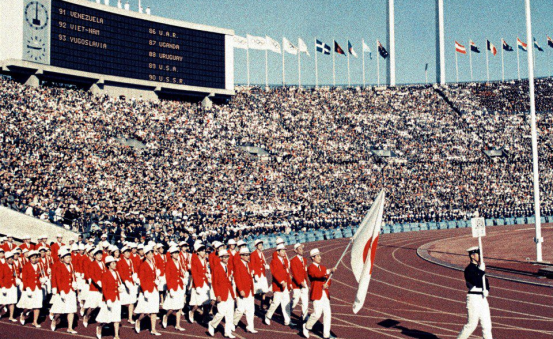
The 1964 Summer Olympics in Tokyo represented a monumental milestone for Japan and the Asian continent. It was the first time the Games were hosted in Asia, signaling Japan’s successful reintegration into the international community following the devastation of World War II. The event was meticulously planned to showcase a “New Japan”—one that was peaceful, technologically advanced, and economically vibrant.
The Symbolic Flame: Yoshinori Sakai
Perhaps the most poignant moment of the Tokyo Games was the lighting of the Olympic cauldron. The final torchbearer was Yoshinori Sakai, a young man born in Hiroshima on August 6, 1945—the very day the atomic bomb was dropped. His selection was a powerful statement of Japan’s commitment to peace and its resilience in the face of catastrophe. Sakai’s presence served as a bridge between a painful past and a hopeful, unified future.
Technological and Infrastructural Revolution
Tokyo 1964 was a catalyst for massive urban development. The Japanese government invested heavily in infrastructure, which fundamentally changed the city’s landscape and set the stage for Japan’s economic miracle. Key developments included:
- The Shinkansen (Bullet Train): Inaugurated just days before the Games, the world’s first high-speed rail connected Tokyo and Osaka, symbolizing the pinnacle of Japanese engineering.
- Global Broadcasting: These were the first Games to be broadcast internationally via satellite (Syncom 3), allowing for live or near-live coverage across the globe in color.
- Venue Architecture: The Yoyogi National Gymnasium, designed by Kenzo Tange, became an architectural icon, blending traditional Japanese aesthetics with modern structural innovation.

Mexico City 1968: High Altitudes, New Records, and Social Revolution
The 1968 Olympics in Mexico City were defined by two major themes: the physical challenges of the environment and the volatile political climate of the late 1960s. As the first Games held in Latin America and at a high altitude (2,240 meters above sea level), the event forced athletes and scientists to reconsider the limits of human physiology.
The Altitude Factor and Athletic Performance
The thin air of Mexico City had a dual effect on performance. In anaerobic events, such as sprinting and jumping, the reduced air resistance led to spectacular world records. Conversely, in endurance events like the marathon and long-distance swimming, the lower oxygen levels proved grueling for athletes not acclimated to high altitudes.
| Athlete | Event | Achievement | Impact of Altitude |
|---|---|---|---|
| Bob Beamon | Long Jump | 8.90 meters (World Record) | Reduced air resistance contributed to a “leap into the 21st century.” |
| Dick Fosbury | High Jump | Gold Medal | Introduced the “Fosbury Flop,” revolutionizing the sport’s technique. |
| Jim Hines | 100m Sprint | 9.95 seconds | First time the 10-second barrier was officially broken electronically. |
The Black Power Salute and Political Turmoil
Beyond the track, 1968 was a year of global unrest. Just ten days before the opening ceremony, the Tlatelolco massacre occurred, where Mexican security forces killed hundreds of student protesters. On the podium, the intersection of sports and social justice reached a boiling point when American sprinters Tommie Smith and John Carlos raised black-gloved fists during the national anthem to protest racial injustice in the United States. This “Black Power salute” remains one of the most iconic images in Olympic history, representing the athlete’s role as an agent of social change.

1972 Munich Olympics: From the Cheerful Games to the Black September Tragedy
The 1972 Munich Games were originally branded as “The Cheerful Games” (Die Heiteren Spiele). West Germany aimed to erase the memories of the 1936 Berlin Olympics, which had been used as a propaganda tool by the Nazi regime. Munich was designed to be open, transparent, and low-security to showcase a democratic and peaceful Germany.
Athletic Excellence: The Mark Spitz Era
Before the tragedy, the Munich Games were highlighted by extraordinary athletic feats. American swimmer Mark Spitz delivered one of the greatest performances in history, winning seven gold medals and setting seven world records in a single Olympics. His dominance in the pool became a defining narrative of the Games until the events of September 5.
The Black September Terrorist Attack
The “cheerful” atmosphere was shattered when eight members of the Palestinian terrorist group Black September broke into the Olympic Village. They took 11 members of the Israeli Olympic team hostage, demanding the release of prisoners held by Israel. A botched rescue attempt at the Fürstenfeldbruck airbase resulted in the deaths of all 11 hostages, five terrorists, and one German police officer. This tragedy forced the Olympic Games to halt for 34 hours and fundamentally changed the nature of event security forever.
The Legacy of Munich: Security and Counter-Terrorism
The failure of the German police to handle the hostage crisis led to the creation of specialized counter-terrorism units, such as Germany’s GSG 9. Since 1972, the “open” nature of the Olympic Village has been replaced by high-security perimeters, extensive surveillance, and military-grade protection, ensuring that the safety of athletes and spectators remains the primary concern of every host city.

Comparative Legacy of the Mid-Century Olympic Era
When analyzing the period from 1964 to 1972, we see a clear progression in how the Olympics were perceived and utilized. Tokyo demonstrated that the Games could be a tool for economic and technological rebranding. Mexico City proved that the Games were an unavoidable platform for civil rights and political activism. Munich served as a grim reminder that the global visibility of the Olympics made them a target for international terrorism.
These three Games collectively moved the Olympic movement into the modern age. They forced the International Olympic Committee (IOC) to navigate the complexities of global politics, media rights, and security protocols that define the Games today. The transition from the amateur ideals of the past to the high-stakes, multi-billion-dollar global spectacle of the present can be traced directly back to the events in Tokyo, Mexico City, and Munich.
Frequently Asked Questions (FAQ)
- Q1: Why was the 1964 Tokyo Olympics significant for Asian history?
- It was the first Olympic Games ever held in Asia. It served as a global announcement of Japan’s recovery from World War II and its emergence as a leader in technology and infrastructure, specifically highlighted by the debut of the Shinkansen bullet train.
- Q2: How did high altitude affect the 1968 Mexico City Olympics?
- The altitude of 2,240 meters provided thinner air, which reduced resistance and helped athletes set records in short-distance sprints and jumps (like Bob Beamon’s long jump). However, it made endurance events significantly more difficult due to lower oxygen levels, leading to many athletes struggling with exhaustion.
- Q3: What was the “Black Power salute” in 1968?
- During the medal ceremony for the 200m sprint, American athletes Tommie Smith and John Carlos raised black-gloved fists while the U.S. national anthem played. This was a protest against racial discrimination and a statement of solidarity with the civil rights movement in the United States.
- Q4: How did the Munich massacre change future Olympic Games?
- The 1972 tragedy ended the era of “open” Olympic Villages. It led to the implementation of rigorous security protocols, the creation of elite counter-terrorism units worldwide, and a massive increase in the budget allocated for athlete safety at all subsequent international sporting events.
- Q5: Who was the most successful athlete of the 1972 Munich Games?
- Mark Spitz was the standout athlete, winning seven gold medals in swimming. His record of seven golds in a single Games stood for 36 years until it was surpassed by Michael Phelps in 2008.
Editorial note: This is independent cultural and historical commentary. It is not official, authorized, sponsored, endorsed by, or affiliated with the International Olympic Committee, Olympic Games organizers, teams, venues, museums, athletes, or rights holders mentioned.

Related Posts