The 1940 Tokyo Olympics: The Lost Games of World War II
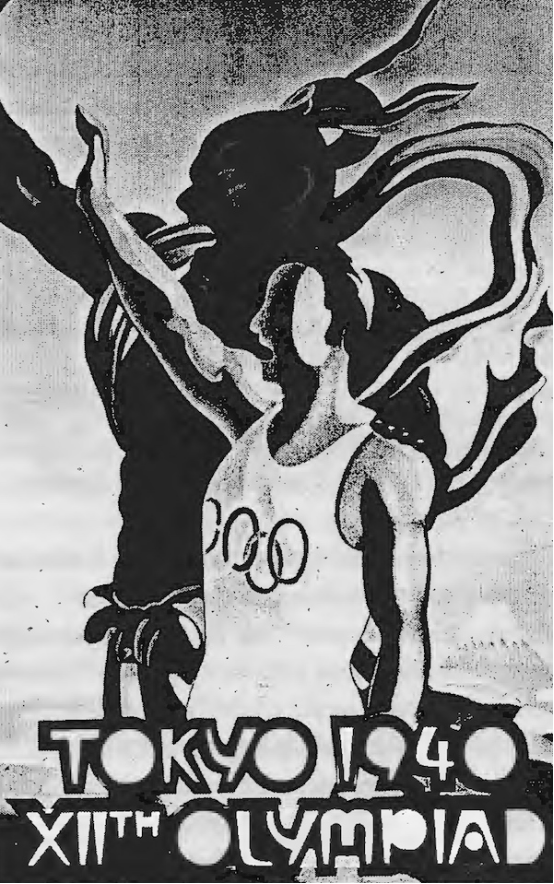
The trajectory of international sports was fundamentally altered in the mid-20th century, beginning with the highly anticipated but ultimately doomed 1940 Olympic Games. Originally awarded to Tokyo, Japan, in a historic 1936 decision by the International Olympic Committee (IOC), these games were intended to be the first ever held in a non-Western country. The selection of Tokyo was deeply symbolic, designed to showcase Japan’s rapid modernization and recovery from the devastating 1923 Great Kanto earthquake. However, the complex geopolitical landscape of the era rapidly overshadowed the Olympic ideals of peace and global unity.
The Shift from Tokyo to Helsinki
As preparations began, the Japanese government invested heavily in infrastructure, planning to construct a massive central stadium in the outer gardens of the Meiji Shrine. Yet, the outbreak of the Second Sino-Japanese War in 1937 severely strained domestic resources and international relations. Military leaders within Japan increasingly viewed the Olympics as a frivolous diversion of vital wartime materials. Consequently, international pressure mounted, with several Western nations threatening a boycott due to Japan’s aggressive expansionism.
By July 1938, the Japanese government officially forfeited the rights to host the Games. The IOC rapidly pivoted, reassigning the 1940 Olympics to Helsinki, Finland, which had been the runner-up in the original bidding process. Helsinki enthusiastically embraced the challenge, accelerating the construction of the Helsinki Olympic Stadium.
Despite the optimism in Finland, global events dictated a different outcome. The onset of World War II following the invasion of Poland in September 1939, coupled with the Soviet Union’s invasion of Finland (the Winter War) in November 1939, made it impossible to host a global sporting event. The 1940 Games were officially cancelled, marking the beginning of a tragic hiatus in Olympic history.
- Geopolitical Disruption: The cancellation underscored the vulnerability of global sporting events to international conflicts and military expansionism.
- Architectural Legacy: Despite the cancellation, the planned infrastructure in both Tokyo and Helsinki laid the groundwork for future Olympic bids, proving that the preparation phase itself accelerates urban development.
- Symbolic Loss: The failure to host the games deprived a generation of athletes of their peak competitive years, a recurring theme throughout the 1940s.
The loss of the 1940 Games served as a grim prelude to the total war that would consume the globe, suspending the Olympic movement and forcing athletes to trade their sporting uniforms for military fatigues.

The 1944 London Olympics: Hope for Reconstruction Amidst Global Conflict
As World War II raged across Europe and the Pacific, the IOC sought to maintain the continuity and spirit of the Olympic movement. In 1939, even as the drums of war were beating loudly, the IOC awarded the 1944 Olympic Games to London. This decision was largely symbolic, a beacon of hope projecting a future where peace would eventually be restored. London prevailed over bids from Rome, Detroit, Lausanne, and Athens, reflecting the international community’s desire to stand in solidarity with the United Kingdom.
The Jubilee Celebrations in Lausanne
Unsurprisingly, as 1944 approached, the sheer scale of the global conflict rendered the hosting of the Olympics an absolute impossibility. London was enduring relentless bombing campaigns, and the world’s resources were entirely mobilized for the war effort. The Games of the XIII Olympiad were officially cancelled without a single venue being prepared or a single athlete being registered.
However, the Olympic spirit was not entirely extinguished. In lieu of the athletic competitions, the IOC organized a modest but profoundly significant celebration in Lausanne, Switzerland, to mark the 50th anniversary of the founding of the modern Olympic movement. This jubilee served multiple critical functions:
- Preservation of Institutional Continuity: By holding an official event, the IOC ensured that the organizational framework of the Olympics survived the war.
- Reaffirmation of Core Values: The gathering in neutral Switzerland provided a platform to reiterate the founding principles of Pierre de Coubertin—that sport should foster international understanding and peace.
- Planning for the Future: Behind closed doors, sports administrators began the arduous process of planning for the post-war resurrection of the Games, laying the critical groundwork for the eventual 1948 London Olympics.
The non-existent 1944 Games remain a poignant chapter in Olympic history. They represent the darkest hour of the 20th century, yet the quiet determination of the IOC during this period ensured that the Olympic flame, though hidden, was never truly extinguished.

The 1948 London Olympics: Post-War Rebirth and the Austerity Games
The conclusion of World War II left Europe in ruins, economies shattered, and populations traumatized. In this landscape of devastation, the revival of the Olympic Games seemed both an impossible luxury and a vital necessity. London, still bearing the fresh scars of the Blitz, courageously stepped forward to host the 1948 Olympics. These Games became universally known as the “Austerity Games,” a testament to the harsh economic realities of post-war Britain and the incredible resilience required to stage a global event under such conditions.
Logistical Triumphs in an Era of Rationing
The organizing committee faced unprecedented challenges. There was absolutely no capital available for the construction of new, grandiose sporting venues or a dedicated Olympic Village. Instead, the organizers relied entirely on existing infrastructure and brilliant improvisation.
Wembley Stadium, originally built for the 1924 British Empire Exhibition, served as the centerpiece, hosting the opening ceremonies, track and field events, and the football finals. A temporary running track made of cinders was laid down inside the stadium. To house the thousands of incoming athletes, the organizers repurposed military convalescent camps, Royal Air Force bases, and college dormitories across the city.
Food rationing was still strictly enforced in Britain. To prevent the Games from placing an unbearable burden on the local population, participating nations were asked to bring their own food. This led to remarkable scenes of international cooperation and disparity:
- Global Contributions: The United States flew in daily shipments of fresh meat, bread, and dairy. Denmark provided vast quantities of eggs, while Argentina donated mutton.
- Shared Resources: Nations with surplus supplies frequently shared their provisions with athletes from countries whose economies were completely decimated by the war, embodying the truest spirit of Olympic camaraderie.
- Uniforms and Equipment: Many athletes competed in modified military clothing or hand-me-down equipment, as specialized athletic gear was scarce and prohibitively expensive.
Despite these severe limitations, the 1948 London Olympics successfully gathered 59 nations and over 4,000 athletes. However, the geopolitical fallout of the war was evident: Germany and Japan, the primary Axis powers, were explicitly not invited, and the Soviet Union chose not to participate, setting the stage for future diplomatic complexities.

Athletic Milestones and the Rise of New Heroes in 1948
The 1948 Games were not merely a logistical miracle; they were a profound athletic success that introduced a new generation of sporting heroes to a world desperate for inspiration. The lack of world-class facilities did not hinder the athletes from delivering performances that pushed the boundaries of human potential.
The Phenomenon of Fanny Blankers-Koen
The absolute standout star of the London Games was the Dutch athlete Francina “Fanny” Blankers-Koen. A 30-year-old mother of two, Blankers-Koen shattered contemporary stereotypes regarding age, gender, and motherhood in highly competitive sports. Nicknamed the “Flying Housewife,” she entered four track and field events and won gold in all of them: the 100 meters, 200 meters, 80-meter hurdles, and the 4×100 meter relay.
Her extraordinary achievements challenged the deeply entrenched sexism of the era, which often argued that vigorous physical exertion was detrimental to women. Blankers-Koen’s dominance proved that female athletes could achieve unparalleled excellence while balancing family life, making her a pioneer for women’s sports globally.
Other Notable Triumphs
Beyond Blankers-Koen, the 1948 Games featured several other historic milestones that captivated the global audience:
- Bob Mathias: The 17-year-old American prodigy won the grueling decathlon just months after taking up the sport, becoming the youngest track and field gold medalist in Olympic history at that time.
- Micheline Ostermeyer: The remarkable French athlete won gold in both the shot put and discus, and bronze in the high jump. Astoundingly, she was also a concert pianist, celebrating her victories with an impromptu Beethoven recital at her team’s headquarters.
- Karoly Takacs: The Hungarian pistol shooter provided one of the most emotional storylines of the Games. After a defective grenade severely injured his dominant right hand in 1938, Takacs taught himself to shoot with his left hand, ultimately winning gold in the rapid-fire pistol event.
These stories of triumph over adversity perfectly mirrored the global sentiment of 1948. The London Olympics proved that the human spirit could soar even amidst the rubble of a broken world, successfully re-establishing the Olympic Games as the pinnacle of international sporting achievement.

The 1952 Helsinki Olympics: The First Cold War Athletic Contest
If the 1948 Games were about survival and rebirth, the 1952 Helsinki Olympics marked the beginning of a new, highly politicized era in international sports. Finally fulfilling the promise made to Finland prior to WWII, Helsinki hosted a Games that would become the first true athletic battleground of the Cold War. The geopolitical landscape had shifted dramatically, with the world now divided into two distinct ideological blocs led by the United States and the Soviet Union.
The Debut of the Soviet Union
The most consequential development of the 1952 Games was the debut of the Soviet Union. Prior to this, the USSR had shunned the Olympics, viewing them as a bourgeois capitalist enterprise. However, recognizing the immense propaganda value of international sporting dominance, the Soviet leadership authorized participation, aiming to demonstrate the superiority of the communist system through athletic supremacy.
This integration was fraught with tension. The Soviet delegation refused to be housed in the main Olympic Village in Käpylä alongside athletes from Western capitalist nations. Instead, they demanded and received a separate Olympic Village in Otaniemi, which they shared exclusively with athletes from Eastern Bloc satellite states such as Hungary, Romania, and Bulgaria. This physical segregation manifested the “Iron Curtain” on the Olympic stage.
The East vs. West Medal Race
The Helsinki Games introduced the phenomenon of the “medal table” as a proxy for geopolitical strength. The American and Soviet media obsessively tracked the daily medal counts, treating every track final and gymnastics routine as a battle for ideological supremacy. The United States ultimately edged out the Soviet Union in the overall gold medal count (40 to 22), but the USSR’s impressive debut total of 71 overall medals immediately established them as an athletic superpower.
- State-Sponsored Athletics: The Soviet success brought international attention to their state-sponsored sports programs, where athletes were technically amateurs but effectively full-time professionals supported by the military or the state apparatus.
- Psychological Warfare: The intense rivalry forced Western nations, particularly the United States, to drastically increase funding and structural support for their own athletic programs to keep pace.
- Diplomatic Tensions: Despite the fierce competition, the Helsinki Games were largely praised for maintaining a peaceful atmosphere on the field of play, proving that the Olympics could function as a diplomatic safety valve during periods of extreme global tension.
The 1952 Olympics fundamentally altered the stakes of international competition, ensuring that future Games would be heavily scrutinized through the lens of Cold War politics.

Historic Performances and the Legacy of Emil Zátopek
While geopolitical tensions dominated the headlines, the 1952 Helsinki Olympics were also defined by athletic performances of unprecedented brilliance. The standard of competition had risen significantly since 1948, as athletes benefited from improved post-war nutrition, training methodologies, and the intense motivation provided by the new East-West rivalry.
The Unrepeatable Treble of Emil Zátopek
The undisputed hero of the Helsinki Games was the Czechoslovakian long-distance runner, Emil Zátopek. Known as the “Czech Locomotive” due to his agonizing facial expressions and unorthodox, heavy-footed running style, Zátopek achieved a feat that has never been matched in Olympic history.
Zátopek first won the 5,000 meters in a fiercely contested final. He then dominated the 10,000 meters, successfully defending the title he had won in London four years earlier. In a display of supreme endurance and perhaps a touch of madness, he decided at the last minute to enter the marathon—a distance he had never previously raced competitively.
During the marathon, Zátopek famously conversed with the race favorite, Jim Peters of Great Britain, asking if the pace was too fast. When Peters jokingly replied that it was too slow, Zátopek accelerated, eventually breaking Peters and winning the marathon by over two and a half minutes. His unprecedented treble—winning the 5,000m, 10,000m, and marathon at a single Olympics—remains one of the greatest athletic achievements of the 20th century.
Data Comparison: The Evolution of Olympic Scale (1948 vs. 1952)
The growth of the Olympic movement between London and Helsinki was substantial, reflecting global recovery and the integration of new geopolitical powers. The table below illustrates this rapid expansion:
| Metric | 1948 London | 1952 Helsinki | Percentage Increase |
|---|---|---|---|
| Participating Nations | 59 | 69 | +16.9% |
| Total Athletes | 4,104 | 4,955 | +20.7% |
| Female Athletes | 390 | 519 | +33.0% |
| Total Events | 136 | 149 | +9.5% |
The data clearly demonstrates a significant leap in global participation, particularly the encouraging 33% increase in female athletes, signaling a slow but steady shift toward greater gender inclusivity in international sports. The Helsinki Games proved that the Olympics had fully recovered from the devastation of WWII and were entering a phase of rapid, highly competitive expansion.

The 1956 Melbourne Olympics: A Challenge Across the Hemisphere
The 1956 Olympic Games represented a massive geographical and logistical leap for the IOC. Awarded to Melbourne, Australia, these were the first Games ever to be held outside of Europe or North America, and the first to be staged in the Southern Hemisphere. This historic decision was fraught with immense challenges that threatened to derail the event before it even began.
The Tyranny of Distance and Seasonality
Because Melbourne is located in the Southern Hemisphere, the traditional July-August Olympic window fell during the Australian winter. Consequently, the Games had to be scheduled for late November and early December to align with the Australian summer. This unprecedented timing caused massive disruptions to the training schedules of Northern Hemisphere athletes, many of whom struggled to peak so late in the calendar year.
Furthermore, the sheer distance to Australia posed a severe financial and logistical burden on participating nations. Transcontinental air travel was still in its relative infancy and prohibitively expensive, forcing many teams to undertake grueling, multi-week boat journeys that compromised athlete fitness and morale.
The Equestrian Quarantine Crisis
The most bizarre logistical hurdle arose from Australia’s incredibly strict animal quarantine laws. The Australian government absolutely refused to waive a mandatory six-month quarantine for foreign horses, rendering it impossible to hold the equestrian events in Melbourne. In an unprecedented move, the IOC was forced to split the Games across two continents.
The equestrian events were held in Stockholm, Sweden, in June 1956, five months before the main Games commenced in Melbourne. This remains the only time in Olympic history that events for a single Olympiad were held in different countries, on different continents, and in different seasons.
- Logistical Innovation: The split Games required the IOC to develop entirely new protocols for medal ceremonies, official record-keeping
Editorial note: This is independent cultural and historical commentary. It is not official, authorized, sponsored, endorsed by, or affiliated with the International Olympic Committee, Olympic Games organizers, teams, venues, museums, athletes, or rights holders mentioned.

Related Posts