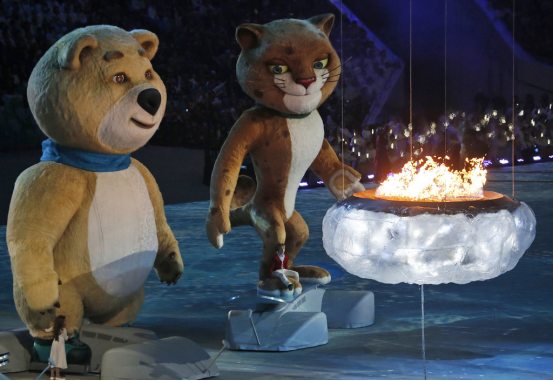
In February 2014, at the closing ceremony of the Sochi Winter Olympics, a charming polar bear approached the cauldron and extinguished the Olympic flame in a unique manner. This act not only captivated audiences worldwide but also sparked profound reflection on history and culture. While the scene’s creativity and humor elicited laughter, it also concealed complex emotions and cultural memories, a journey that transcended time and space.
Misha’s Reappearance: Echoes of History
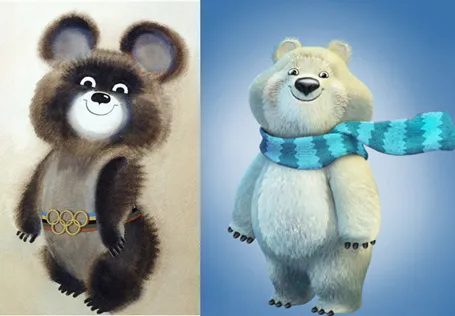
The name “Misha” is deeply ingrained in Russian culture. In Russia, this name is often used to describe any bear, and its historical significance far exceeds that of a simple animal symbol. As early as the 1980 Moscow Summer Olympics, Misha entered the global audience as a mascot. Although the Moscow Olympics failed to gain widespread international support due to the political context of the Cold War, Misha’s tears at the closing ceremony are forever etched in Olympic history. Her tears symbolized the unspoken emotions of that era—humiliation, loss, and unchangeable political realities. This moment has become one of history’s most symbolic images, inspiring countless people to deeply sympathize with and understand that period.
From “Misha” to “Polar Bear”: Cultural Continuity and Transformation
Time flies, and while the 1980 Misha has become a classic symbol in memory, in 2014, Russia once again touched the hearts of the world with another polar bear, “Misha,” at the closing ceremony of the Sochi Winter Olympics. Unlike the Moscow Misha, this polar bear was more playful and modern, symbolizing the inheritance and renewal of an era.
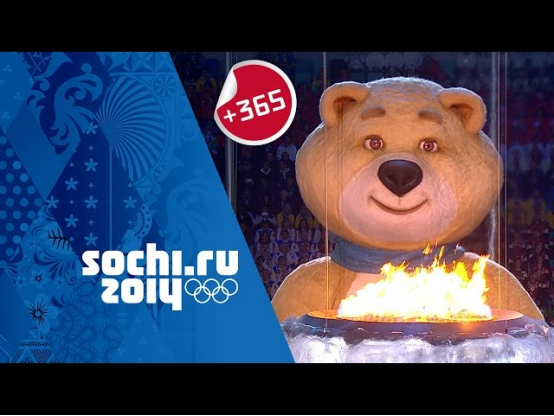
At the closing ceremony, the polar bear slowly walked across the snow toward the Olympic cauldron. The air was cold and the surroundings were silent. Suddenly, Misha took a deep breath, as if condensing all history and emotion, and with a gentle flick of her wrist, she extinguished the Olympic flame, the very symbol of the Olympic spirit. This unexpected gesture was both dramatic and rich in symbolism. It was not only a creative breakthrough, but also a performance that conveyed Russia’s understanding of history and its emotional expression to the world. The scene ended with Misha quietly shedding tears, a scene that undoubtedly echoed Misha’s tears in Moscow in 1980, a heartfelt farewell to that era.
Background of “Misha” 2014: More than one mascot
Although “Misha” became the iconic mascot of the Sochi Winter Olympics, the choice of this character was fraught with controversy. Initially, the Sochi Organizing Committee did not consider the polar bear. In 2008, Sochi held an informal mascot selection process, ultimately choosing a dolphin, but this design failed to attract widespread attention. Subsequently, an official competition resulted in the polar bear being selected. However, the design process for the polar bear was not smooth sailing. Its close connection to Russia’s political situation at the time made the mascot imbued with political connotations.
The polar bear’s design bears a striking resemblance to the logo of Putin’s United Russia party, evoking the shaping of Russia’s national image. Even more controversial, Viktor Chezhikov, the designer of the 1980 “Misha” mascot, protested the design, claiming it plagiarized his own original creation. This controversy reflects the complex historical and cultural layers behind the mascot, hinting at the intertwined political atmosphere, historical sentiments, and cultural identity of Russia behind this seemingly simple cartoon character.
Russian humor and self-deprecation: a unique expression of culture
The Sochi Winter Olympics closing ceremony wasn’t just a celebration of winter sports; it also showcased the unique humor and self-deprecation inherent in Russian culture. While Russia may be perceived as a serious and solemn nation by global audiences, at these Olympics, the Russians used a lighthearted and humorous approach to show the world a different side of themselves. The “four rings” performance at the closing ceremony was a prime example: through this creative and humorous segment, Russia demonstrated its self-deprecation of embarrassing historical events and, in doing so, expressed tolerance for the past.
This humor not only lightened the atmosphere but also reflected the open-mindedness and confidence of the Russian people in facing historical challenges. Through this display of cultural heritage, the Russians told the world that despite having experienced political and social ups and downs, they can still look forward with laughter and embrace a brighter future.
Conclusion: Misha and Rael, an emotional resonance across time and space
From “Misha” at the 1980 Moscow Olympics to Misha the polar bear at the 2014 Sochi Winter Olympics, mascots carry more than just a simple symbol; they are a vehicle for national sentiment. At the closing ceremony of the 2014 Sochi Winter Olympics, Misha was more than just Russia’s mascot; it was a legacy of cultural memory, a fond look back at history, and a release of emotion.
Through Misha’s reappearance, Russia conveyed a message to the world: even though history has inflicted deep pain, Russia is capable of facing the future with lightheartedness and humor, bravely moving into a new era. Misha, as a polar bear, is more than just an animal; she is a microcosm of Russian culture, a meeting point of history and emotion. As the closing ceremony conveyed, the Russian spirit is no longer simply defined by the heaviness and pain of the past, but rather a force of resilience, optimism, and self-confidence.
Behind this scene, the emotions expressed by the Russians through Misha not only allow global audiences to see an image of Russia that is different from that during the Cold War, but also allow us to reflect on the profound influence of history and culture in shaping a national identity.
Editorial note: This is independent cultural and historical commentary. It is not official, authorized, sponsored, endorsed by, or affiliated with the International Olympic Committee, Olympic Games organizers, teams, venues, museums, athletes, or rights holders mentioned.

Related Posts